‘The Lover’ by Marguerite Duras may appear to be erotic fiction, but it is in actuality a haunting, colonial fever dream. Duras visits her memories in short gasps of paragraphs, littered with multiple visions of the past—of her time in Vietnam during the French occupation. Her couplings with a Chinese businessman quickly become a side story to the real darkness of what colonization does to the colonizers as they fail to straddle cultures.
Old-world rules are hard to shake off.
Duras depicts her mother’s mental breakdown as they lose everything in the colony yet still refuse to return to France. The colony holds the position of a woman to the ransom of her sexual exchange, as she has nothing else to offer this closed, isolated, white society. She is always a wife and never an autonomous person within these microcosms of exported European identity; thus, the madness stems from being tied to impossible notions of respectability while male corruption erupts without consequence or regulation. Should she stray outside these extremely tight notions of respectability, she becomes unseen, invisible to society, and ever more vulnerable to the ongoing corruptive actions of others as Duras’ family suffers the rages of her older brother.
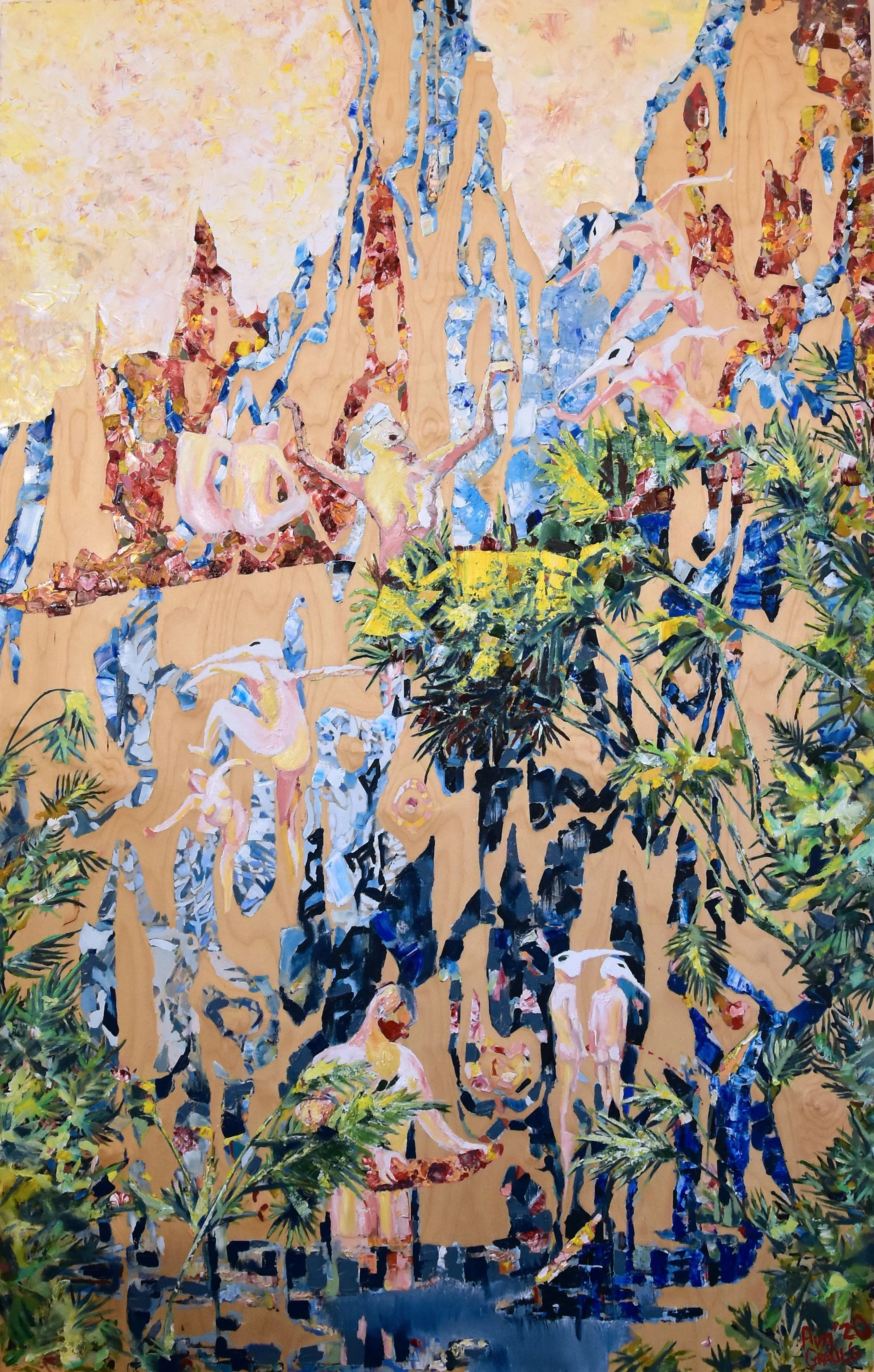
Land of the Dancing White Devils
Land of the Dancing White Devils projects this eroticism of the Orient and the exotic, grounding the concept firmly in the mind of the colonizer as a complete fabrication. Within the jungle and waterfall, white skull figures dance, piss, and touch themselves in euphoria. Notions of otherness and wild behavior are completely managed and created in the mind of the occupier, pissing and claiming territory. These figures behave with abandonment because, in this perceived wilderness, they make the rules.
As Gauguin paints his Tahitian paradise, he does not inhabit the lives of the women he uses. He exploits their disinterest in his perceived sexual repression of the coy European woman, which he turns into perversion. He paints in wild, vivid colors, seeing only nakedness. He never sees himself as old, undesirable, and riddled with syphilis. Instead, he embodies his landscapes of the mind, allowing himself every available opportunity without impunity.
Pissing in the Wind depicts the small, white-skulled form as the figure creates demarcation lines on newly captured lands. Sometimes he helps his mate piss; there is camaraderie in this circle of elitism. Camaraderie works as a social form of agreed alliance that allows a small group to continue ruling.
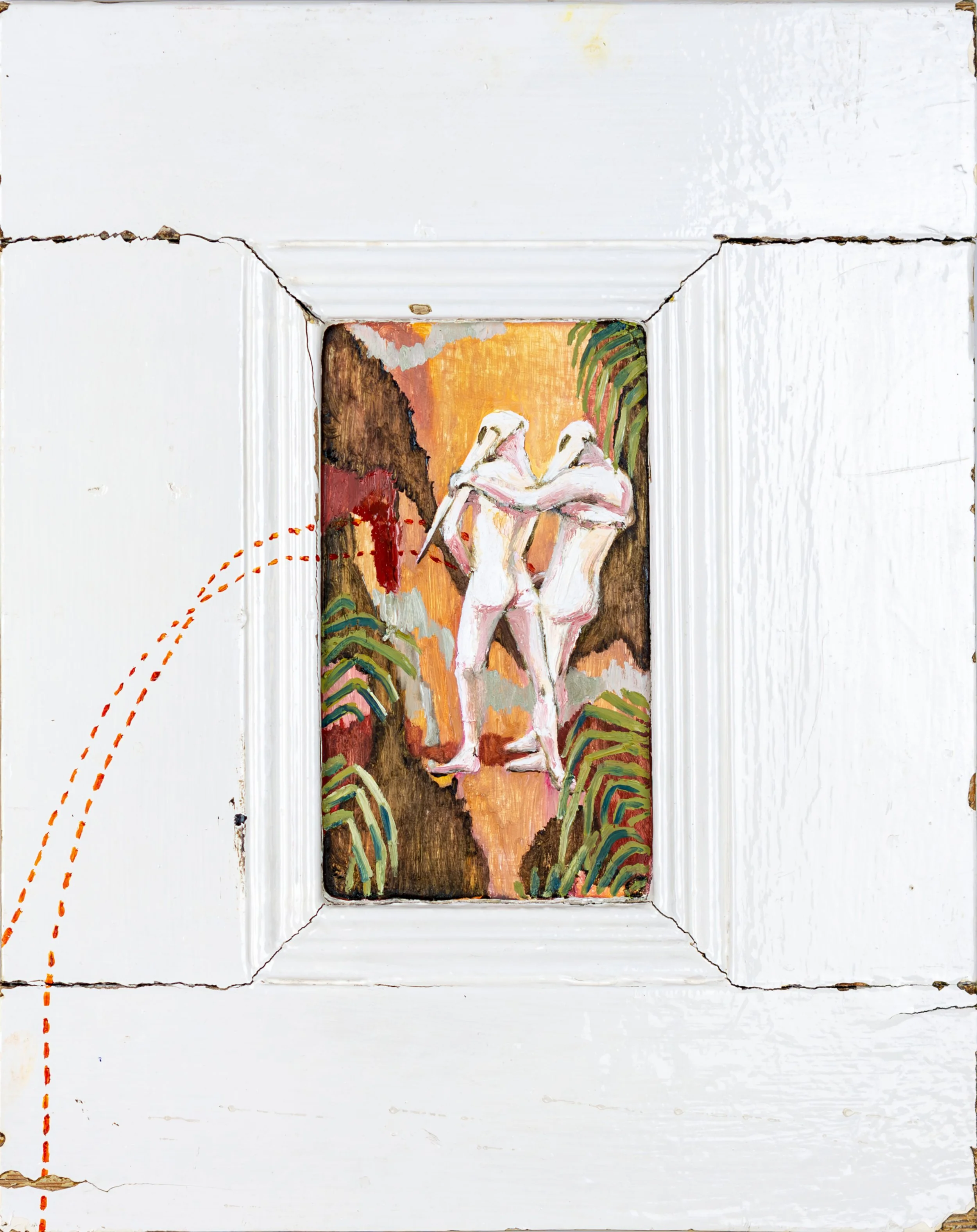
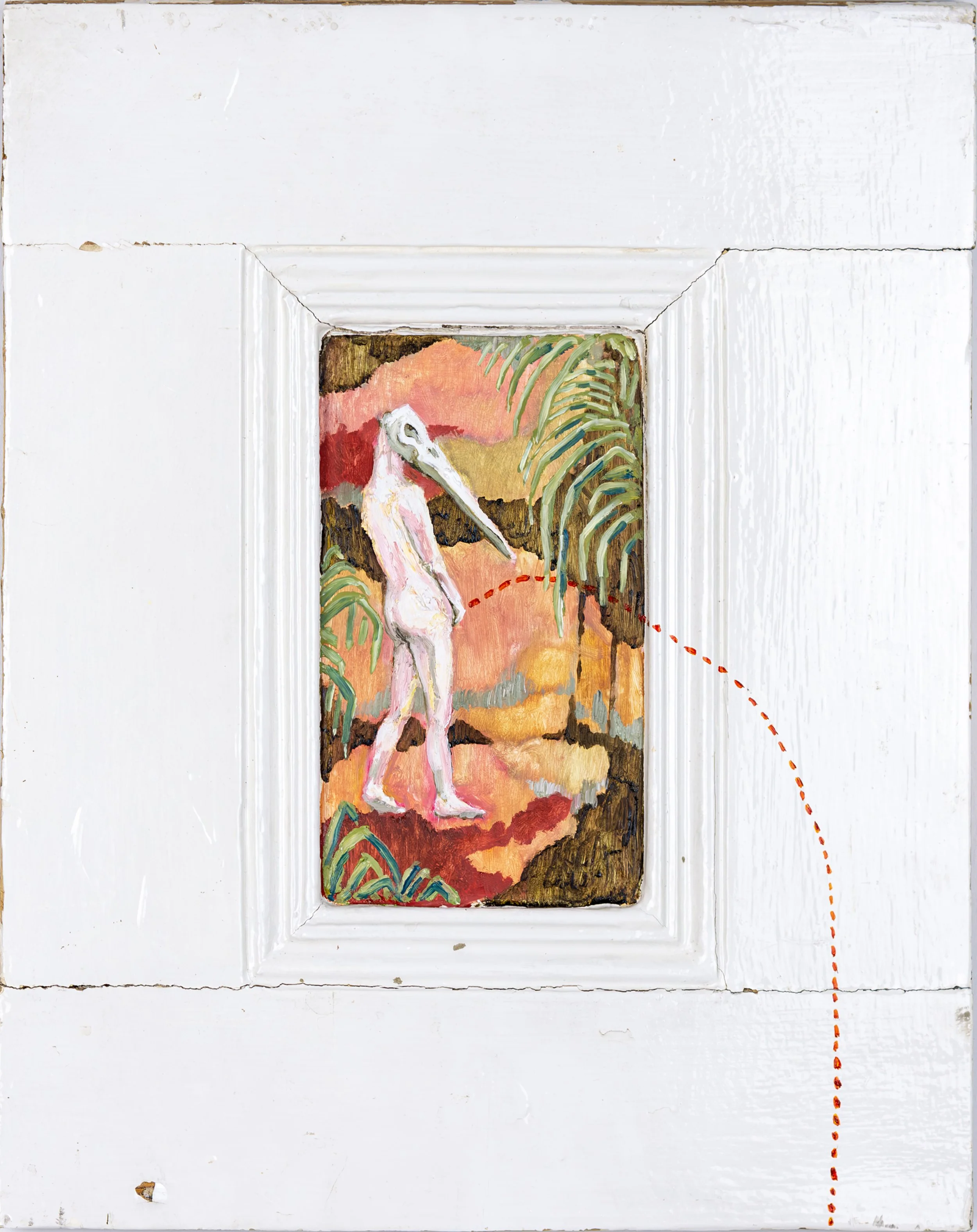
Pissing in the wind
In my memories as a young girl on a mine in Eswatini, there are nighttime gatherings where the white adults gather on the lawn to drink. They drink themselves into oblivion, much like the Black mine managers do in their own separate clubhouse further down in the valley. One of the white men became a fugitive; he stole money in the night and abandoned his wife and two children. There are women kept indoors as housewives, isolated within the wilderness of the mine. There is an unmistakable unhappiness in these wives.
As children, we had the freedom to play with whomever we wished—a freedom that we would inevitably lose as adults. Among the adults within this imported society, people silently broke apart. Everyone drank too much; what happened was forgotten, but never truly forgotten. All the while, mine workers were condemned to a slow respiratory death in the mountain behind them.
The Dancing White Devils series captures the strangeness of that time and the visions of the jungle-like forests of the mountains.
A colonial fever dream.